

Asset Protection
Shield Your Assets Without Slowing Growth
Shield Your Assets Without Slowing Growth
Asset protection is the legal process of structuring your business, investments, and personal wealth to reduce risk from lawsuits, creditors, and unforeseen events. Entrepreneurs, real estate investors, and professionals face unique exposure, and with the right planning, you can safeguard your assets while continuing to grow
Risk Tiers Every Entrepreneur Faces
Operational Risk
Lawsuits from customers, employees, vendors.
Contractual Risk
Business partners, leases, guarantees, financing.
Personal Risk
Divorce, malpractice claims, creditor judgments.
LLC Layering vs. Series LLC
LLC Layering
Separate businesses or properties into different LLCs.
Use a holding company for ownership.
Shields liabilities between entities.
Series LLC
Available in states like Texas, Delaware, Nevada.
One master LLC with separate “series” for assets or ventures.
Lower cost than multiple LLCs, but varies by state law.
Comparison Table
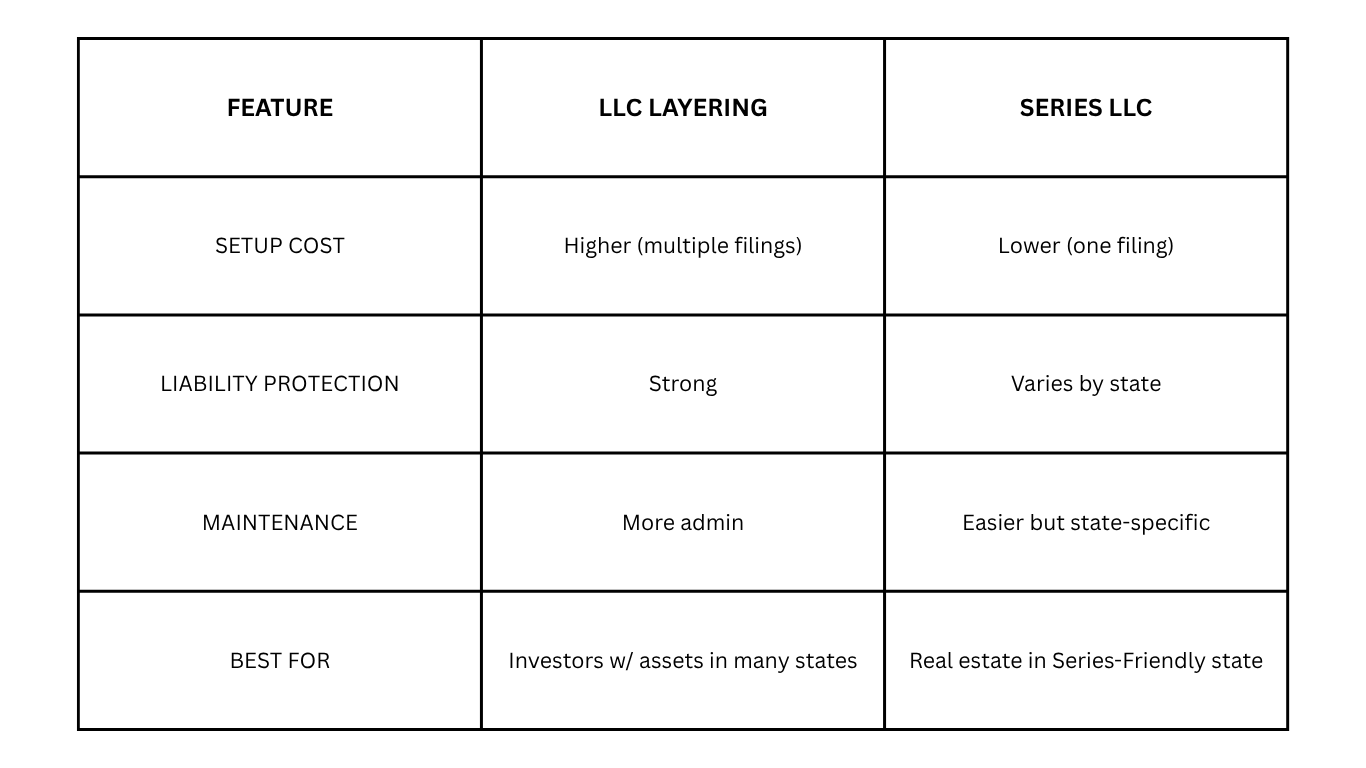
Charging Order Protection
A charging order limits a creditor’s remedy to distributions from an LLC or partnership.
Strongest in states like Nevada, Delaware, and Wyoming.
Critical for professionals and investors with high liability exposure.
Insurance + Legal “Umbrella” Strategy
Commercial Insurance (general liability, malpractice, E&O).
Umbrella Policies (extra coverage beyond base policies).
Legal Structures (LLCs, FLPs, trusts) as a backstop if insurance fails.
Domestic vs. Offshore Protection
Domestic (DAPT)
States like Nevada, Delaware, South Dakota allow Domestic Asset Protection Trusts.
Useful for shielding personal wealth, but subject to U.S. court jurisdiction.
Founder Scenarios (Practical Examples)
E-commerce brand: Shield IP and inventory using LLC + offshore trust.
Landlord: Protect rental properties using Series LLC + umbrella insurance.
SaaS founder: Pre-exit GRAT or IDGT for tax and liability planning.
Compliance & Maintenance Checklist
1
2
3
4
Offshore (Cook Islands, Nevis)
Stronger protection from U.S. judgments.
Requires compliance with IRS and FATCA rules.
Often used by entrepreneurs with high net worth or international exposure.
File annual reports, pay state fees.
Keep business and personal funds separate.
Maintain meeting minutes and operating agreements.
Review structures annually and after life/business changes.
FAQS
-
By combining insurance with legal structures like LLCs, trusts, and charging order protection.
-
No — they serve different purposes. An LLC protects business assets, while a DAPT protects personal wealth from creditors.
-
Nevada, Delaware, Wyoming, and South Dakota are commonly used due to favorable laws.